Whose Truth is True?
Broadening our perspective is critical for democracy

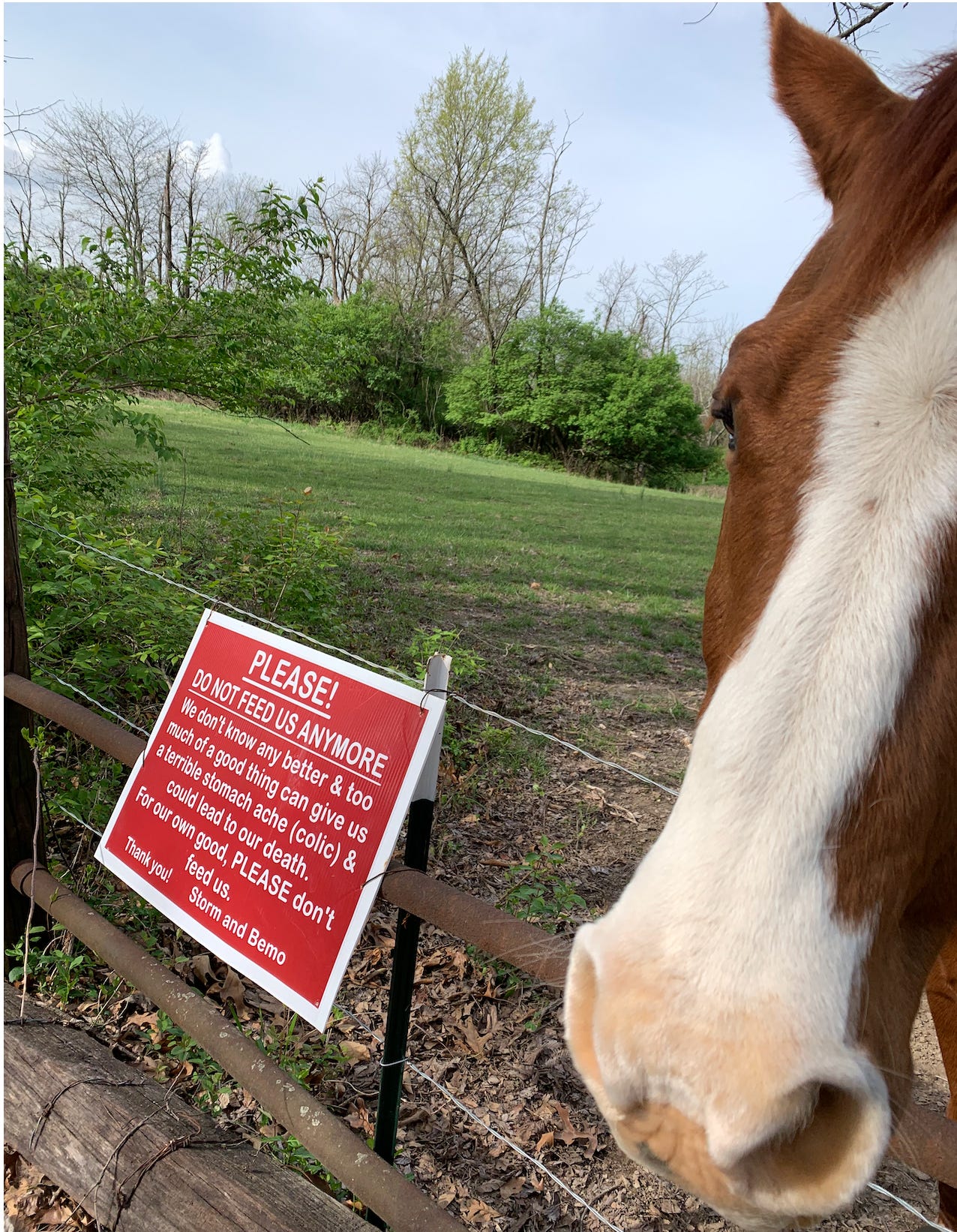
Take a walk with me on the path near my home, and you’ll see a sign on a pasture fence where two horses live. It says, “PLEASE! DO NOT FEED US ANYMORE. We don’t know any better & too much of a good thing can give us a terrible stomach ache (colic) & could lead to our death. For our own good, PLEASE don’t feed us. Thank you! Storm and Bemo.”
As I walked behind a couple of women, I heard one tell the other, “That sign is so stupid. I’m here all the time, and I’ve never seen horses.” She got me thinking about what I’ve seen with my own eyes, how the truth of her experience compares to mine, and what this means in the world beyond the pasture.
“Hungry” Horses
Before this sign went up, Storm and Bemo eagerly greeted walkers by hanging their heads over the fence. I would occasionally see people feeding them carrots or apples. As a former horse owner, I knew it’s bad to supplement a horse diet with too many treats, but I kept quiet until one day a man offered them an entire bag of apples, handing out one after the other to the delight of the horses.
I stopped to ask whether he owned the horses. When he said he didn’t, I politely told him the harm that can come from too many treats. He said, “They’re just apples,” and shoved more into willing mouths.
Months later, the sign appeared. Unable to read the statement written in their own names, Bemo and Storm continued to beg by the sign. I assume people respected it and stopped feeding them because the horses rarely haunt that gate anymore.
Truth is More Than Our Experience
Everyone in this story had information from their own experience that they absolutely believed to be true. Each was correct from their own perspective, but lacked information to percieve a complete picture.
The man knew apples are healthy for humans and horses like apples. But he didn’t know about the quantity that is healthy for horses.
The owners knew their horses were sick, and treats cause colic. But they didn’t know who was feeding the horses nor how often.
The walking woman knew she had never observed any horses there. But she likely started coming recently and didn’t know the history.
Storm and Bemo’s tale reminds me that in every aspect of life, we only have part of the story. Of course, our own firsthand experiences are pivotal in forming our opinions and guiding our actions. Sometimes we call our lived experiences “our truth.” Yet relying ONLY on our own perspective creates dangerous blind spots when it comes to actions that affect our community. We need to rely on the experiences of others to break out of habits and actions that cause harm to vulnerable people we don’t normally witness.
What Can’t We See?
This story only affected Storm and Bemo, but lapses in perspective happen all the time in human life. We should frequently check ourselves by asking, “What can’t we see?” Privilege, geography, age, gender, and other factors shield us from seeing how policies cause suffering. This happens when people, especially lawmakers, dismiss hardships like systemic racism, gender dysphoria, or even hunger because they’ve never experienced it for themselves.
Something even worse is happening right now in the United States. Americans are allowing violent ICE operations in our cities because most of us haven’t witnessed government aggression and don’t believe it could happen here. The violent presence of ICE (Immigrations and Customs Enforcement) directed by the Trump Administration to incite violence has spread from Portland to Chicago to Minneapolis to Orlando and more. It’s widely covered in the media now, but is also widely ignored by people who choose not to see it. For those with whistles sounding in their streets to warn of ICE presence or friends of Renee Good who died at the hands of an ICE agent, it’s impossible to ignore. We need to go out of our way to see what’s not directly in front of us.
Apathy towards ICE raids make me think about my late mother, who rarely went anywhere from her Oklahoma home except church and always had FOX News on in the background. In the spring of 2025, I talked to her about non-white American citizens being stopped for documentation. I pushed her to think about my father (who died in 1983) and how we would have felt if he’d been snatched off the street because of his Chinese features. She insisted he would have been proud to carry papers on him because he worked hard for his citizenship, unlike “other” immigrants. Without other perspectives, she accepted this lie that white Americans tell each other to justify violence.
Living a secluded life, listening to only one news source won’t let other views in. It would be a different situation if a loved one were kidnapped to a detention center before ICE bothered checking documents. But if we wait until most of us know someone dragged out in their underwear in the snow by ICE, it will be too late to do much about it.
Find Out What’s Happening
What can we do about our limited perspective? The first step is to acknowledge the gap and work to change it.
Put yourself in a position to know what’s happening. If ICE is in your town and you are able, go out in the streets where ICE operates to see what they are doing with a whistle and the camera on your phone at the ready. Read from multiple reputable sources in the cities infiltrated by ICE. Volunteer at places that help immigrants and refugees, so you can hear their stories.
Right now, I’m stuck in one-room isolation with COVID. So, it would be easy to douse myself in cold medicine, curl up with a novel, and say, “I don’t see any ICE agents here.” But my phone brings me voices of friends in Chicago and Minneapolis. Plus, my laptop is a window to the world, so I have no reason not to see what’s happening and no excuse to stay silent about it.
Amplify the Voices of the Oppressed
The next thing to do is to amplify the voices of people who are in the path of ICE. Someone else may need your voice, as a trusted source, to shake them out of complacency. A friend who isn’t looking at the news might be following your social media. Your member of Congress (whether Republican or Democrat) definitely needs to hear from you, their constituent. Call, write, and email your members of Congress. (Here’s a helpful script from MomsRising)
After that, act. If you are able, attend protests in your area. Get involved with mutual aid to help bring food and supplies to communities targeted by ICE. I saw an invitation today for a group asking for help to fold printed flyers with information about our rights and what to do if ICE comes to your door. That last idea would be comfortable, inside, and undemanding, but is important!
Stay Hopeful and Engaged
The most important thing you can do is stay hopeful and engaged. Governments use violent force to intimidate us for one reason: to convince us there is no hope for success. State violence distracts from the fact that ICE is a relatively small group that does not include the National Guard, Army, Navy, Air Force, or Marines. Their success is not a foregone conclusion if 340 million Americans continue to realize that ICE actions are not about removing “dangerous undocumented criminals” and are instead about removing civil rights from Americans.
Take hope from the successful nationwide protests and allow that to fuel your actions. You might stand on an overpass or at an intersection with only about 50-100 other people, but you are acting along with thousands across the country, and your action will give hope to people who drive by and see your sign.
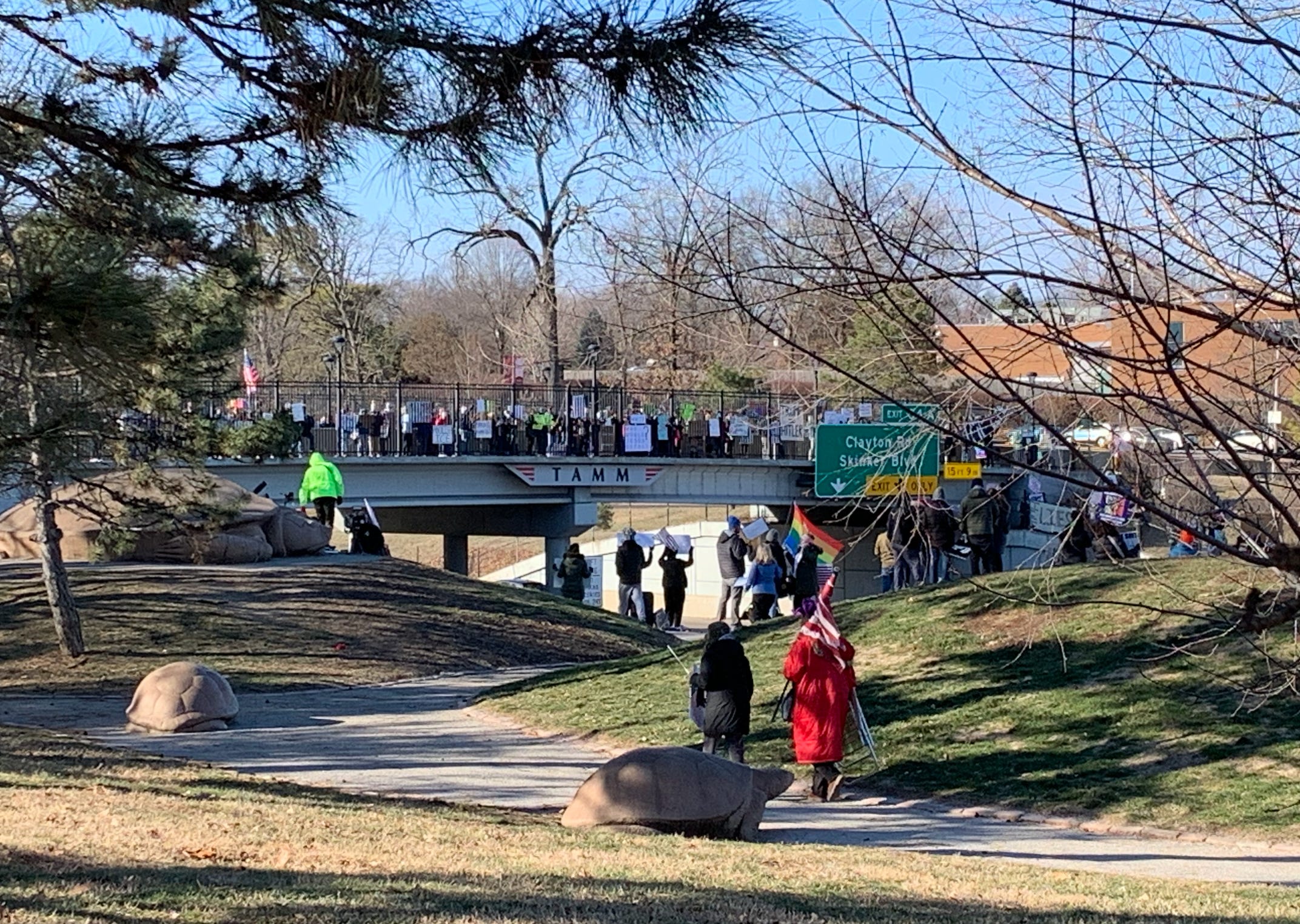
Just like the sign helped share the needs of Storm and Bemo, YOU can be the “sign” that helps other people see what they couldn’t see for themselves.
How to Purchase My Autographed Books Online
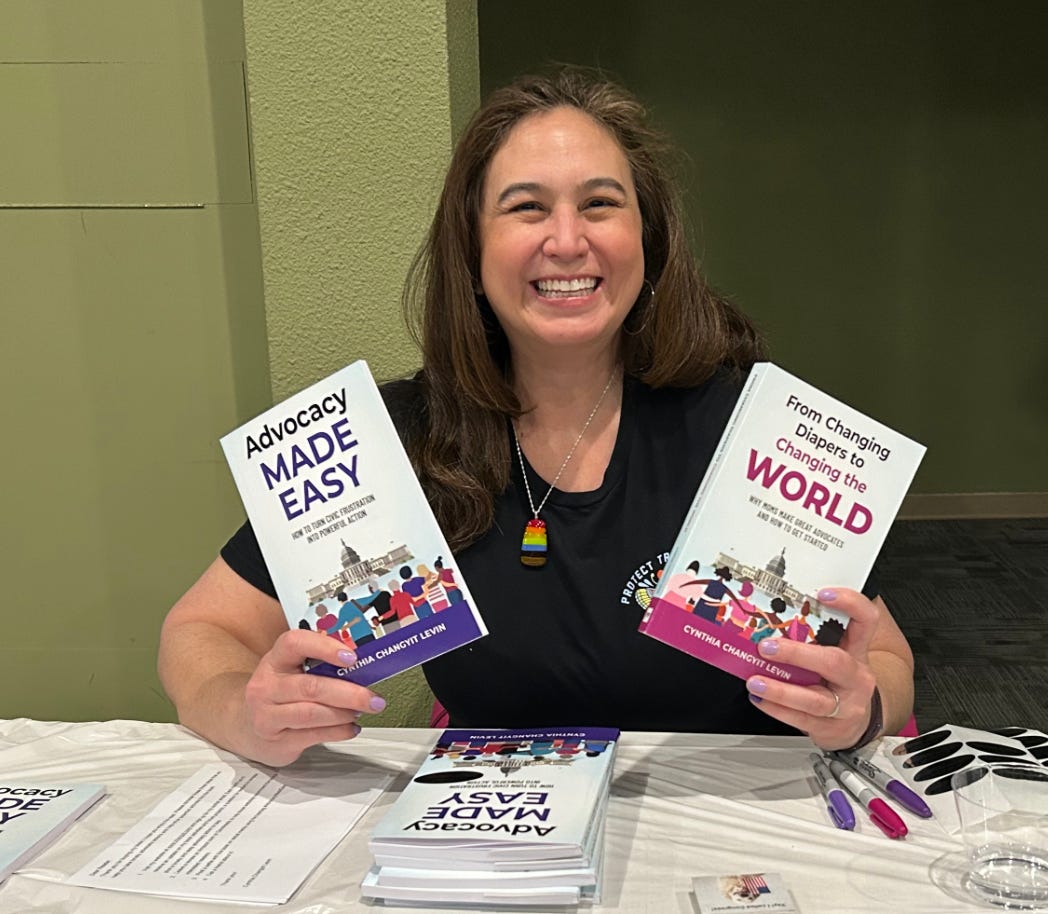
My first book, “From Changing Diapers to Changing the World: Why Moms Make Great Advocates and How to Get Started,” is a warm and witty guidebook helping moms to make a better world for all of us. It provides inspirational stories and “how-to” instructions for new and experienced activists to get more involved in advocacy.
My second book, “Advocacy Made Easy: How to Turn Civic Frustration Into Powerful Action,” is a practical handbook designed to demystify the advocacy process for everyone. It offers a convenient, step-by-step guide to making your voice heard in the halls of power—no political experience required.
Buy an autographed copy from my website at www.changyit.com/books.
Order online at bookshop.org or Barnes & Noble.
Order from any independent bookstore near you!